01
Ecosystem mapping
Every system, flow and hand-off mapped, including the shadow exports nobody documented.

SolutionWeb Challengers
CRM, finance, commerce, support and internal systems connected into one controlled automation layer: information moves once, failures are visible and staff stop reconciling the same records by hand.
Most operations have a hidden tax: the export-import between systems, the re-keyed order, the report assembled by hand every Friday. Each one works fine, until volume grows, someone's off sick, or a value goes silently wrong. Integration and automation remove that tax at the source.
We build the connections as infrastructure, not glue: a controlled layer where each system publishes and subscribes, every movement is logged, and failures queue for attention instead of disappearing. Staff get one trusted flow instead of five fragile rituals.
Crucially, the layer stays observable. A dashboard shows what moved, what failed and what needs a human, so automation earns trust rather than demanding it, and nobody wonders whether 'the sync' ran last night.
Data entered once, flows everywhere it's needed
Failures queue and alert, nothing vanishes silently
Reconciliation reports replace hand-checking
Grows connection by connection, at your pace
Scoped to the flows that cost the most time: each connection ships complete, monitored and documented.
Every system, flow and hand-off mapped, including the shadow exports nobody documented.
CRM, finance, commerce, logistics and support connected with clean, logged data flows.
Repetitive processes (order handling, onboarding, notifications) automated with human checkpoints where judgement is needed.
Records kept in step across systems, with conflict rules and a master for every data type.
A live view of every automated flow: failures alert a person, with the context to fix them fast.
Automated checks that prove systems agree, ending the month-end hand-verification ritual.
Real project patterns connected to this service, solution or industry experience.
View all case studies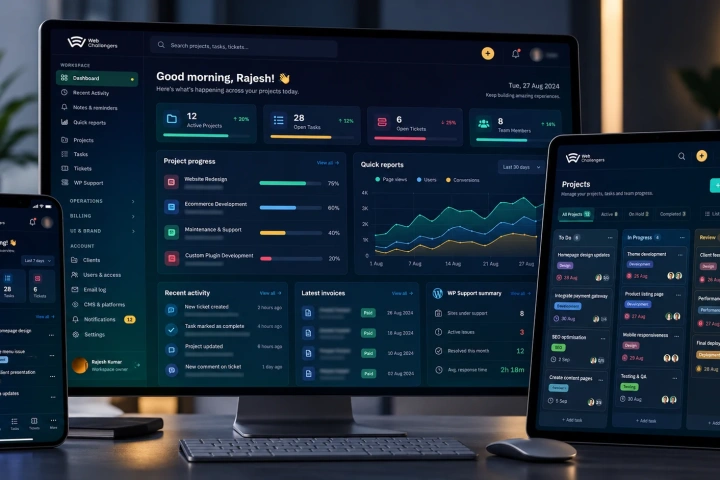
A secure Laravel + Vue platform unifying projects, clients, teams, support, billing and bulk WordPress operations: built to make 400–700+ website estates practical to manage from one place.
View Web Challengers Operations Hub case study↗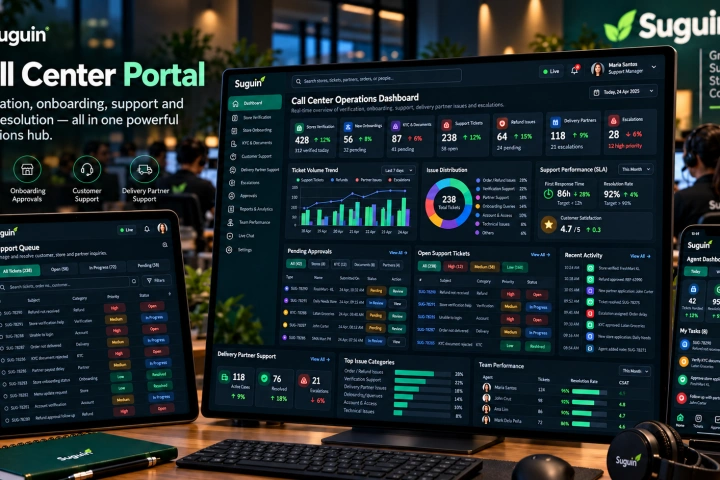
A Vue.js operations portal for store verification and onboarding, document/KYC approval, customer support, refunds, delivery-partner assistance, escalations and support-team visibility.
View Suguin Call Center & Verification Portal case study↗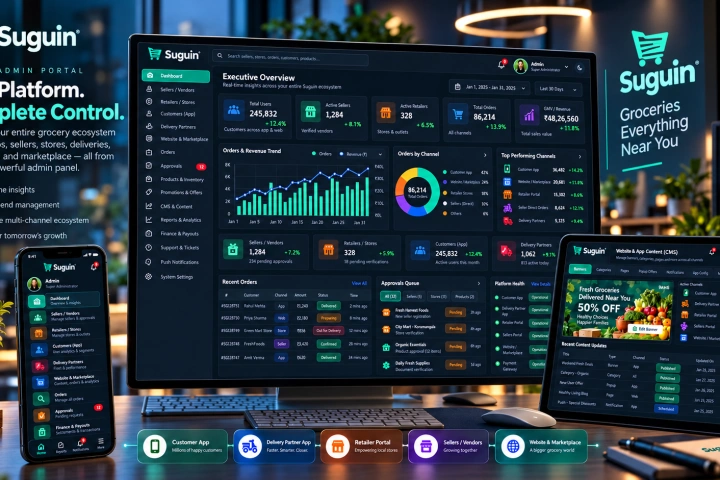
The Laravel and MySQL core of the Suguin ecosystem, managing sellers, retailers, customers, delivery partners, catalogues, orders, content, promotions, approvals, payouts, support and platform-wide controls.
View Suguin Central Admin & Business Control Platform case study↗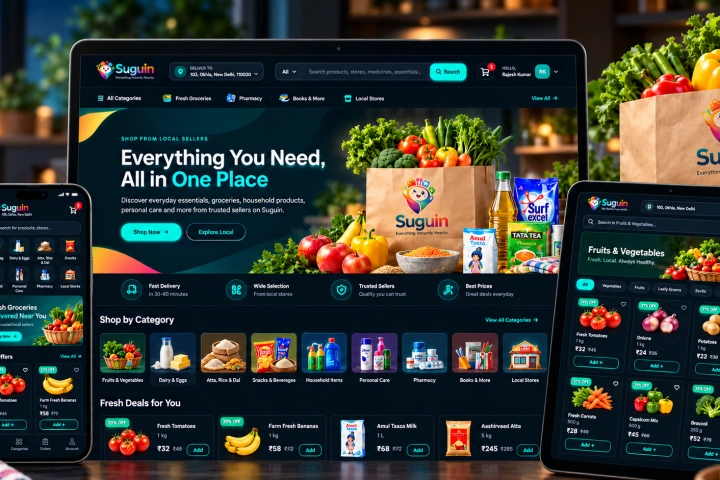
A responsive Vue.js marketplace for local shopping across groceries and everyday products, with search, categories, product detail, cart, checkout, account and order flows connected to the Suguin platform.
View Suguin Customer Marketplace Website case study↗Big-bang integrations are how trust dies. We connect incrementally and verify everything.
We trace every hand-off and export in the operation, then rank them by hours wasted and risk carried.
The highest-cost flow automated end to end: logged, monitored and reconciled from day one.
Once the first flow runs quietly, we extend the layer to the next: momentum with evidence.
Manual exports and hand-checks are formally retired, with the monitoring layer standing guard.
When the same customer record lives in three systems, automation multiplies the disagreement instead of solving it. Before connecting anything, each data type needs one master: decide it once, in writing, and every future integration inherits the clarity.
Integrations are judged by their worst day. Ask of every flow: if the payment provider is down for three hours, what should happen: queue and retry, alert and pause, or carry on degraded? Build that answer in from the start and automation becomes something you can lean on.
Straight answers about how this work is scoped, delivered and supported.
Ask something else →Almost always. Modern SaaS platforms expose APIs, and where they don't we bridge via files, webhooks or vendor-specific connectors.
Both, chosen honestly per flow: simple low-volume flows suit platforms, while business-critical movement deserves custom code with queues and retries.
A monitoring dashboard shows every flow's status, volumes and failures, with alerts that reach a person, not a log file.
That's the recommended path: one flow, proven and quiet, builds the trust and pattern for everything that follows.
Tell us about the exports, re-keying and Friday rituals. We will map the ecosystem and automate the flow that hurts first.
Discuss your ecosystem ↗