01
Storefront design & build
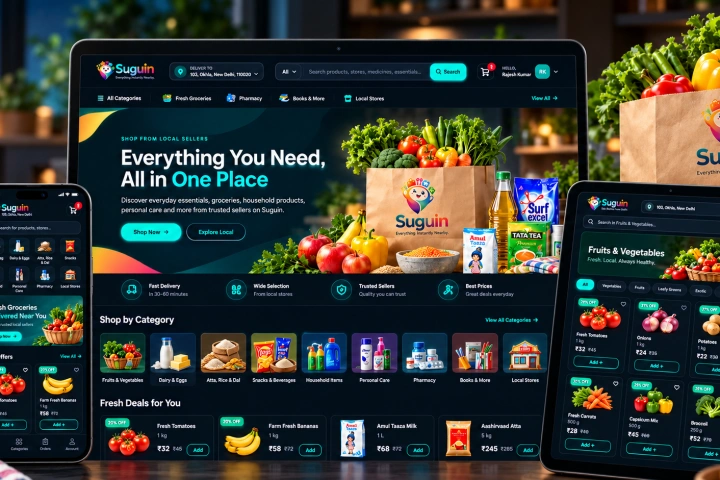
Fast, mobile-first category and product experiences that make discovery and comparison effortless.

ServiceWeb Challengers
Stores built around the full sale: product discovery, checkout, payments, orders, fulfilment and returns — so the storefront and the back office finally run as one system.
Anyone can make a product page look good. Revenue is won or lost at the awkward moments: the payment that fails, the discount that stacks wrongly, the return nobody can process. We design and test those paths deliberately, because that is where carts are abandoned and support tickets are born.
We build on the platform that fits the model — WooCommerce for content-rich stores you want to own, Shopify for operational simplicity, custom builds for marketplaces and complex pricing. The choice is made from your catalogue, margins and operations, not from our preferences.
Then we connect the store to the business: stock synced with your warehouse or 3PL, orders flowing to fulfilment, refunds reconciling in your accounts. When the sale is connected end to end, growth stops creating admin jobs.
Checkout journeys designed and tested to convert
Payments, subscriptions and refunds handled cleanly
Stock, orders and fulfilment synced with your systems
Trading performance reviewed after launch, not just assumed
Scoped to your model — a focused single-brand store and a multi-channel operation get different builds.
Fast, mobile-first category and product experiences that make discovery and comparison effortless.
Friction-measured checkout with wallets, payment gateways, abandoned-cart recovery and fraud screening configured.
Plans, free trials, pause-and-skip flows and dunning for failed payments — recurring revenue that doesn't leak.
Orders, stock and shipping synced with your warehouse, 3PL or ERP — including the exception paths.
Products, customers, orders and — critically — URLs moved with redirects planned so rankings and revenue survive.
Merchandising controls, discount rules, GA4 commerce tracking and the reports your team reviews each week.
Real project patterns connected to this service, solution or industry experience.
View all case studiesLaunch dates are chosen against your peaks — we plan backwards from the season that matters.
We document the journey from first visit to repeat order, including every exception your team currently fixes by hand.
Platform setup, design, payments and integrations built on staging with your real catalogue and rates.
Failed payments, refunds, out-of-stocks and address oddities tested deliberately before launch day.
Cutover with redirects and monitoring, then close trading support through your first peak period.
One-off orders, subscriptions, trade accounts with custom pricing and multi-vendor marketplaces are different engineering problems. Naming every model you intend to run — including the one planned for next year — prevents the replatform conversation nobody wants to have.
An established store's URLs, customer accounts and order history are commercial assets. Migration is engineered with redirect maps, staged data imports and reconciliation checks — treated as the highest-risk part of the project, because it is.
Straight answers about how this work is scoped, delivered and supported.
Ask something else →It follows from your model: Shopify for operational simplicity, WooCommerce for content-rich ownership, custom for marketplaces and complex pricing. We recommend based on your margins and operations — not our convenience.
Yes — redirect mapping, staged data migration and pre-launch reconciliation are core to how we replatform. Rankings are protected by process.
Yes. We integrate stock, orders, shipping and returns with your existing systems, including the failure paths when a connection drops.
Yes — plans, trials, skipping, pausing and failed-payment recovery, configured to match your revenue model.
Tell us what you sell, where it hurts and what your peak season looks like. We will scope a build around your revenue, not a template.
Discuss your store ↗