01
API design & build
REST APIs with versioning, authentication and documentation your own team can build against confidently.

ServiceWeb Challengers
APIs, webhooks and system connections engineered for the parts integrations usually miss — authentication, retries, duplicate events, reconciliation and the visibility to debug them.
Every integration works in the demo. The real test is the Tuesday when a provider has an outage, a webhook fires twice, or an order arrives malformed. We build for that Tuesday: idempotent handlers, dead-letter queues, retries with backoff and alerting that tells a human before a customer does.
We begin with ownership, not endpoints: which system is the source of truth for each record, what happens on conflict, and what staff see when a connection drops. Those decisions — made before any code — are the difference between an integration and a liability.
Then we make it observable. Every connection logs what it sent, what came back and what it did about it, with a small admin screen so support can answer 'did that order go through?' without waking a developer.
Source-of-truth and conflict rules agreed before build
Retries, idempotency and failure queues as standard
Monitoring with alerts that reach a human early
Credentials and access structured for long-term ownership
Scoped per system — one clean payment connection or a whole operational ecosystem.
REST APIs with versioning, authentication and documentation your own team can build against confidently.
Payments, CRM, ERP, shipping, marketing and finance systems connected with their quirks handled and documented.
Inbound events verified, deduplicated and queued — so a provider's retry storm never corrupts your data.
Record-level sync between platforms with conflict rules, so both systems agree on what is true.
Clean APIs laid over ageing software that was never designed to talk to anything — without touching its core.
Dashboards, alerting and an admin view of every event — with reconciliation reports for finance.
Real project patterns connected to this service, solution or industry experience.
View all case studies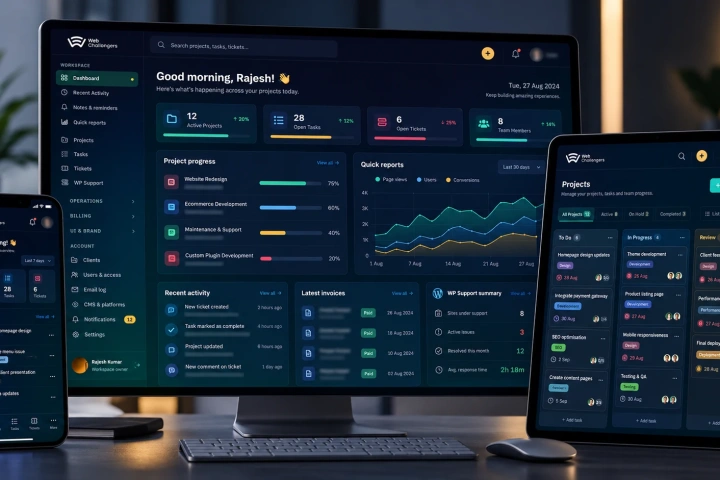
A secure Laravel + Vue platform unifying projects, clients, teams, support, billing and bulk WordPress operations — built to make 400–700+ website estates practical to manage from one place.
View case study↗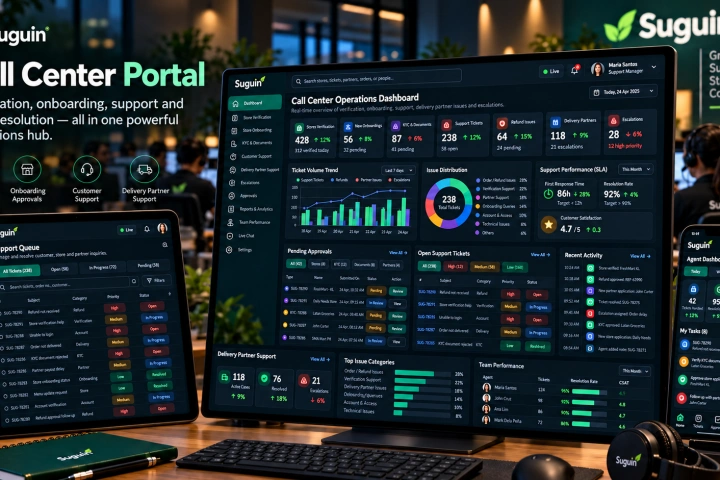
A Vue.js operations portal for store verification and onboarding, document/KYC approval, customer support, refunds, delivery-partner assistance, escalations and support-team visibility.
View case study↗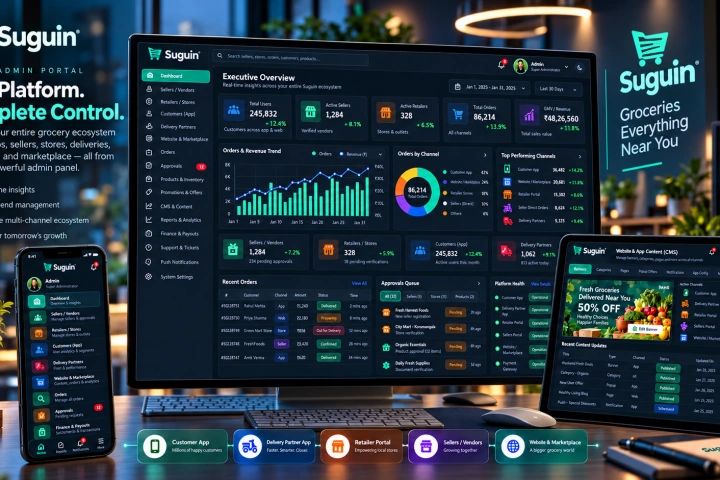
The Laravel and MySQL core of the Suguin ecosystem, managing sellers, retailers, customers, delivery partners, catalogues, orders, content, promotions, approvals, payouts, support and platform-wide controls.
View case study↗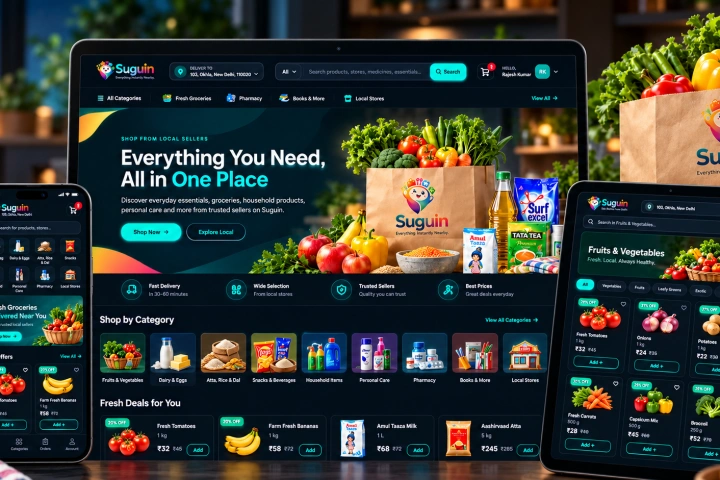
A responsive Vue.js marketplace for local shopping across groceries and everyday products, with search, categories, product detail, cart, checkout, account and order flows connected to the Suguin platform.
View case study↗We test failure on purpose before production finds it for us.
Systems, record ownership, volumes and failure consequences documented and agreed before any endpoint is touched.
Core connection delivered first, with real credentials and realistic data volumes from day one.
Timeouts, duplicates, malformed payloads and provider outages simulated — then handled for real.
Alerts, dashboards and runbooks in place, with your team trained on the admin screens.
Most integration pain is a data-ownership question wearing a technical costume. If your CRM and your billing system both believe they hold the customer's email, one of them will eventually win — decide which, and when, before the first sync runs.
Rate limits, webhook timeouts, sandbox quirks and API version deprecations decide timelines more than code does. We read provider documentation so you don't have to — and flag the constraints that will shape your roadmap.
Straight answers about how this work is scoped, delivered and supported.
Ask something else →Usually. We bridge via database views, file exchange or a thin API layer over the legacy system — clean integration without destabilising what already works.
Events queue with retries and alerts. Nothing is lost, staff see a clear status, and the backlog processes itself when the provider recovers.
Yes — we trace the failure modes, add the missing reliability layer (retries, logging, reconciliation) and stabilise it, whether or not a rewrite is needed.
Secrets live in a vault or environment store, never in code — with least-privilege access per connection and rotation handled as routine.
Tell us what needs to talk to what, and what breaks when it doesn't. We will scope the connection — including the failure paths nobody else quotes for.
Discuss your integration ↗